October 19, 2026
Industrial environments present continuous challenges to concrete surfaces through relentless machinery movement, heavy equipment operation, and accidental drops of dense tools or materials. Unprotected concrete floors quickly develop microfissures, surface spalling, and systemic cracking under such unforgiving operational demands. Applying heavy duty epoxy creates a seamless barrier that significantly alters how substrate materials handle extreme physical forces and environmental stress. This specialized chemical formulation bonds directly with underlying concrete to form an impenetrable shield capable of absorbing massive mechanical loads while preventing surface wear. According to Mordor Intelligence, the global adhesives and sealants market was valued at USD 85.38 billion in 2025, driven significantly by large-scale infrastructure projects that rely on structural bonding. Modern industrial facilities increasingly rely on these advanced coating materials to preserve structural infrastructure, enhance daily operational safety, and avoid costly building repairs caused by constant mechanical stress.
Absorbing Severe Mechanical Impact Forces
Heavy industrial equipment, dropped inventory, and heavy machinery generate intense localized pressure when striking bare concrete floors. Without high-performance surface protection, these physical impacts shatter the brittle crystalline structure of concrete, leading to immediate chipping, deep fracturing, and eventual structural collapse. Utilizing heavy duty epoxy provides a resilient polymer matrix that absorbs kinetic energy and distributes force evenly across a broader surface area. This energy dissipation prevents shockwaves from shattering the rigid concrete below, effectively preserving the structural integrity of the slab during intense high-impact operations across busy production zones.
The elastomeric and tensile properties inherent in high-quality resin coatings allow the material to flex minutely under sudden extreme loads without cracking or delaminating. When heavy steel containers or heavy automotive components drop onto the treated surface, the coating cushions the strike rather than yielding to brittle structural fracture. This exceptional impact resistance ensures that high-traffic work areas remain smooth, continuous, and free from hazardous potholes or jagged surface voids that could compromise material handling operations or damage vehicle tires.
Resisting Continuous Surface Friction Abrasion
Constant foot traffic, rolling forklift tires, and dragged heavy pallets exert continuous frictional forces that steadily grind down bare concrete surfaces. Over time, this mechanical friction creates deep grooves, releases fine silica dust into the air, and steadily thins the protective slab. Applying heavy duty epoxy establishes an exceptionally hard, dense surface layer that resists abrasive wear far better than unconditioned stone or concrete substrates. The resulting nonporous armor withstands millions of rolling wheel passes without wearing thin or shedding dangerous particulate matter into the surrounding workspace environment.
Beyond resisting mechanical scraping, the smooth yet tough surface prevents micro-abrasions that typically allow moisture and chemical contaminants to enter the substrate. By preventing fine surface scratches from forming, the protective coating retains its structural density and smooth finish even under severe daily mechanical friction. Facility operators notice a dramatic reduction in airborne debris and surface erosion, keeping surrounding equipment cleaner while preserving overall floor depth across high-traffic transport corridors throughout the building.
Preventing Structural Chemical Fluid Degradation
Industrial operations frequently involve exposure to aggressive chemicals, oils, hydraulic fluids, and corrosive cleaning agents that rapidly degrade exposed concrete. When chemicals penetrate untreated floors, they dissolve crucial binding agents, cause chemical spalling, and corrode internal steel reinforcement bars. Applying heavy duty epoxy creates a nonporous chemical barrier that prevents liquids from seeping into the porous matrix of the concrete substrate below. This impermeable seal ensures that spilled fluids remain on the surface where maintenance personnel can safely wipe them away without causing permanent structural damage.
The dense chemical crosslinking of advanced polymer coatings provides long-lasting resistance against acidic compounds, caustic alkalis, and petroleum solvents. Because the surface does not react with aggressive chemical spills, the structural floor maintains its original density and physical strength over extended periods. This complete isolation from chemical degradation prevents subtle internal weakening, ensuring that the floor remains structurally capable of supporting heavy physical machinery without cracking or collapsing.
Eliminating Surface Porosity Moisture Intrusion
Concrete inherently possesses a complex network of capillaries and microscopic pores that draw ambient moisture, water spills, and atmospheric humidity deep into the slab. Internal moisture accumulation weakens concrete binders and, under freezing atmospheric conditions, causes expansive stress that shatters the surrounding stone matrix from within. Incorporating heavy duty epoxy seals every microscopic pore across the surface, blocking water molecules from infiltrating the underlying concrete structure. This complete liquid tightness prevents freeze-thaw damage, internal efflorescence, and moisture-driven bond failures beneath the protective surface layer.
Furthermore, blocking moisture intrusion prevents the growth of hazardous mold, mildew, and biological microflora within tiny concrete cavities. In food processing plants, pharmaceutical manufacturing facilities, and cleanroom environments, preventing moisture absorption is crucial for maintaining strict statutory hygiene standards. The seamless moisture barrier ensures a healthy working environment where frequent washing processes do not lead to subfloor deterioration, structural mold growth, or persistent dampness.
Enhancing Workplace Visibility And Safety
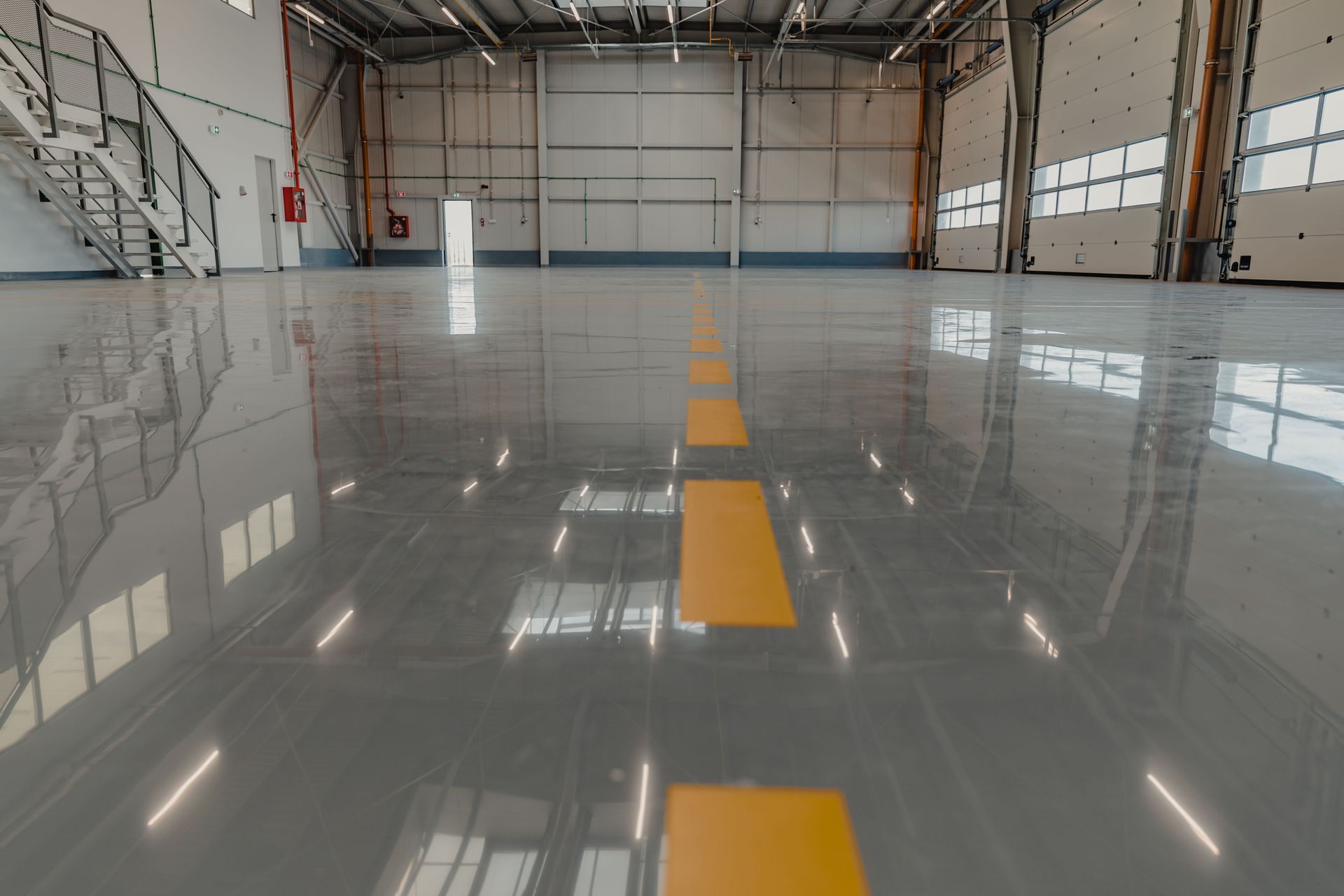
Bright, reflective flooring finishes play a major role in improving illumination levels across large industrial warehouses and manufacturing facilities. Applying heavy duty epoxy produces a lustrous surface that reflects natural overhead lighting, reducing the need for additional electrical light fixtures while eliminating dark, shadowy areas. Brighter working environments improve spatial awareness for machinery operators, reducing accidental equipment collisions, trips, and inventory handling errors across busy operational zones.
In addition to improving light reflectivity, specialized aggregate additives can be incorporated into the top layer to create anti-slip surface textures. These textured particles provide vital foot traction for personnel and rolling rubber tires, preventing dangerous slips even when water or light oils are present on the floor. Combining superior light reflection with slip-resistant properties transforms hazardous industrial environments into significantly safer, highly efficient workspaces for all operational staff.
Streamlining Facility Cleaning Maintenance Routines
Maintaining clean floors in vast industrial warehouses requires significant labor, specialized equipment, and strong cleaning chemicals when surfaces are rough or porous. Untreated concrete traps dirt, oil stains, and tire rubber deep within its pores, making complete sanitation nearly impossible without high-pressure washing techniques. Installing heavy duty epoxy creates a smooth, nonporous surface that prevents dirt and grease from adhering to the floor matrix. Routine maintenance staff can easily sweep, scrub, or mop the seamless surface using standard cleaning equipment, dramatically reducing cleaning time and labor expenses.
The continuous surface eliminates expansion joints and structural cracks where dust and debris typically accumulate, ensuring that cleaning machinery can operate at maximum efficiency. Because the coating resists staining from industrial oils and dyes, the floor retains a clean, bright, and professional appearance with minimal daily effort. This ease of maintenance reduces overall operational overhead costs while supporting a cleaner, healthier, and more productive working environment for all facility personnel.
Investing in high-performance surface protection remains an exceptionally effective strategy for preserving industrial building assets against continuous impact and abrasive wear. By creating a durable, nonporous shield over concrete slabs, facilities avoid structural cracking, chemical degradation, and excessive ongoing maintenance expenses. The resulting floor provides a safer, cleaner, and more resilient foundation capable of withstanding demanding operational workloads year after year. Protecting facility infrastructure ensures uninterrupted operations and long-term cost savings for business owners seeking reliable operational continuity. If you want to learn more about how to protect your industrial facility floors with high-quality coatings, please feel free to reach out to R. C. Davis Co Inc. We look forward to hearing from you!